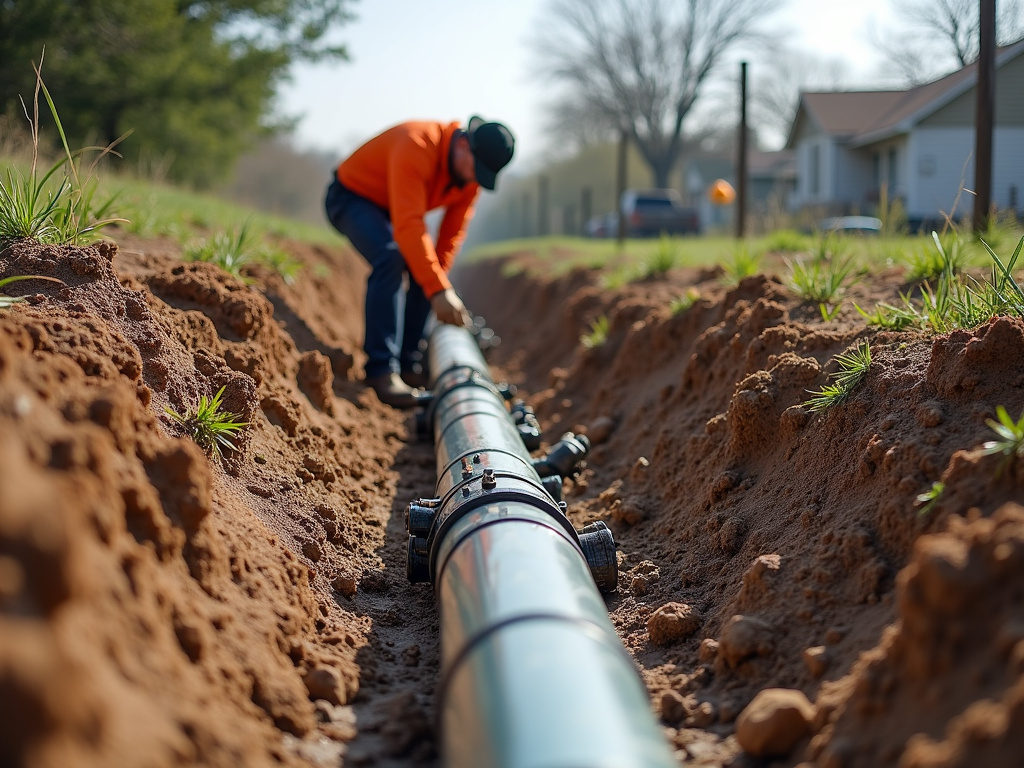
Pipe lining, also called cured-in-place pipe (CIPP), works by pulling a resin-saturated felt liner through an existing damaged pipe and curing it in place with heat or UV light until it forms a new, jointless pipe inside the old one. We use it most often on clay and cast iron sewer laterals under older Richardson homes near Downtown Richardson and Northrich, where root intrusion from mature trees and shifting clay soil are the two biggest recurring problems. It's not a fix for every situation — a line with a full offset joint, a belly (sag) that's collecting solids, or a collapsed section needs point repair or replacement, not lining. Any competent trenchless plumber should camera-scope the line first and tell you honestly if lining isn't the right call.
One thing homeowners don't always know: the pipe still has to be structurally capable of holding a liner. If more than about 20-30% of the pipe's circumference is missing or the pipe has crushed flat in a spot, resin won't bridge that gap properly and you'll get a liner that looks fine on camera but fails under load within a year or two. We also pay close attention to lateral connections — where a branch line ties into the main lateral — because a poorly cut reinstatement can leave a lip that catches paper and grease, causing new backups even after a successful liner install.
In North Texas clay soil, ground movement from our swing between hot, dry summers and wetter periods during severe thunderstorms puts real stress on rigid old pipe joints, which is why we see so many hairline fractures and separated joints on lines running under driveways and mature landscaping in Breckinridge Park and around Galatyn Park. Lining handles that kind of joint separation well because the liner itself is seamless and flexible enough to absorb minor shifting that would crack a rigid pipe again. For commercial and multi-unit properties near UT Dallas, we also run larger-diameter liners for 4-6 inch lines, though those jobs typically need a bypass pumping setup to keep the building's plumbing functional during the cure.
Permitting matters here too — the City of Richardson and Dallas County typically require a permit for sewer lateral work that extends to the public right-of-way or main tap, even when it's trenchless. We pull those permits as part of the job and coordinate any inspection required before backfilling or closing out the work, so you're not left holding an unpermitted repair if you sell the house later.
Pipe Lining in Richardson Services We Offer
✓Sewer Lateral Lining
Full-length cured-in-place lining for the sewer lateral running from your house to the city main, ideal for root-damaged or cracked clay and cast iron lines.
✓Spot Repair Lining
A short, localized liner patch for an isolated crack or joint separation when the rest of the pipe is sound — often cheaper and faster than lining the whole run.
✓Root Intrusion Repair
Mechanical root cutting followed by lining to seal the cracks roots were exploiting, addressing the cause instead of just the symptom.
✓Cast Iron Pipe Rehabilitation
Lining for aging cast iron drain and vent stacks common in older Richardson homes, restoring flow without demolishing walls or slabs.
✓Commercial Lateral Lining
Larger-diameter lining with bypass pumping for restaurants, offices, and multi-unit buildings near UT Dallas and Galatyn Park that can't afford extended downtime.
✓Main Line Lining Under Slab
Trenchless lining for sewer lines running beneath a home's foundation, avoiding slab cutting and concrete repair entirely.
✓Post-Lining Camera Inspection
A follow-up camera scope to confirm liner cure quality, proper reinstatement at connections, and unobstructed flow before we close out the job.
Pipe Lining in Richardson Cost in Richardson, TX
| Service | Typical Range | What Affects It |
|---|---|---|
| Camera Inspection & Diagnosis | $150–$350 | Often credited toward the job if you move forward with lining |
| Spot Repair Lining (short section) | $1,000–$2,500 | Depends on pipe diameter and access point depth |
| Full Sewer Lateral Lining | $4,000–$12,000+ | Driven by pipe length, diameter, number of bends, and access pit count |
| Root Cutting Before Lining | $300–$800 | Extent of root intrusion and number of entry points affects cost |
| Commercial Lateral Lining | $8,000–$25,000+ | Larger diameter, bypass pumping, and after-hours scheduling raise cost |
Ranges are typical for Richardson, TX and confirmed with an exact written quote before any work starts.
How it works
- 1
Camera Inspection
We run a sewer camera through the line first to map the damage, locate root intrusion or joint separation, and confirm the pipe is structurally sound enough for lining.
- 2
Cleaning and Prep
The line gets hydro-jetted or mechanically cleared of roots, scale, and debris so the resin liner can bond fully to the host pipe wall.
- 3
Liner Installation
A resin-saturated liner is pulled or inverted into the pipe, then cured with hot water, steam, or UV light depending on pipe size and access.
- 4
Reinstatement of Connections
Lateral and branch connections are re-cut from inside so nothing catches waste or restricts flow at the joints.
- 5
Final Camera Verification
A closing camera pass confirms the liner cured properly end-to-end before we backfill access pits or close out the permit.
Pricing
Most residential sewer lateral lining jobs in Richardson run from a few thousand dollars for a short spot repair up to the low-mid teens for a full lateral run — always quoted after a camera inspection, never guessed over the phone.